Case Studies

Case Studies - check are we at the same business frequency?

A growing collection of engagements, frameworks, and outcomes from direct experience and expertise. Help yourself by reading and thinking pro and con.

Anonymized Consultancy Case Studies from direct experience

Published case studies summarize selected practical experience across telecommunications, advertising, fashion, retail, e-commerce, and FMCG, with a focus on marketing strategy, digital transformation, marketing technology, marketing mix optimization, and growth. Client and company names and exact numbers have been anonymized to protect confidentiality while highlighting the business challenges, leadership role, and measurable outcomes delivered.

Stop Building Data Products for IT. Start Building Them for Business.
Data Products & Martech· May 2026· 12 min read
Stop Building Data Products for IT. Start Building Them for Business.

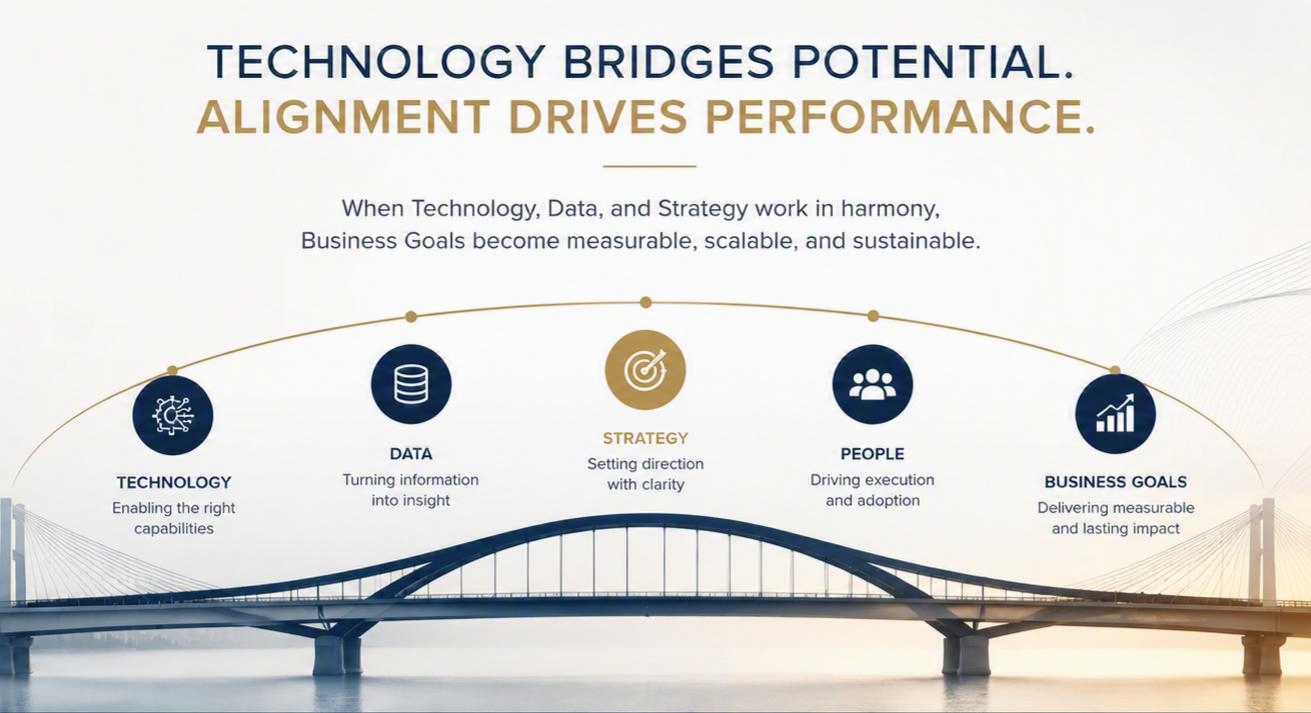
Successful data products do not begin with technology. They begin with a business question. Technology simply enables the answer.

When people hear the term data product, they often imagine dashboards, pipelines, cloud platforms, APIs, or machine learning models.

Technology comes first.

But in reality, successful data products do not begin with technology.

They begin with a business question.

How do we increase customer lifetime value? How do we launch a new digital service? How do we personalize marketing? How do we automate repetitive work? How do we make faster decisions?

Technology simply enables the answer — The translator every organization needs

One of the biggest challenges in digital transformation is not choosing the right technology.

It is connecting two worlds that rarely speak the same language.

On one side are business leaders thinking about growth, customers, revenue, and competitive advantage.

On the other are technology teams thinking about architecture, data models, integrations, governance, and delivery.

Somewhere in the middle, someone has to translate.

Not just requirements.

Intent.

A successful Martech or data product manager spends as much time understanding marketing objectives and business strategy as discussing APIs, customer data models, and automation.

Without that bridge, companies often build technically impressive solutions that nobody actually uses to make decisions.

Data products are strategic assets

A dashboard is not a data product.

A customer data platform is not automatically a data product.

Neither is a data warehouse.

They become data products when they consistently help people make better decisions.

The value is not measured by the number of reports produced.

It is measured by business outcomes:

Better customer experiences

Faster decision making

More effective marketing investments

Higher operational efficiency

New digital products and services

Sustainable business growth

Technology is only successful when it changes how the business operates.

Every data product should answer one question

Before discussing architecture, ask:

What business decision will this product improve?

If that question is not clear, the product risks becoming another internal tool with limited adoption.

The best data products have a clear purpose:

Help marketing personalize campaigns.

Help sales identify opportunities.

Help leadership understand performance.

Help operations automate manual work.

Help customers receive better digital experiences.

Everything else supports that objective.

Digital transformation is continuous

Digital transformation is not a one-time project.

It is a capability.

Organizations that succeed create an environment where data products continuously evolve alongside business needs.

That requires curiosity.

It requires cross-functional collaboration.

It requires business and technology learning from each other instead of working in separate silos.

The goal is not simply to digitize existing processes.

It is to rethink how decisions are made.

Keep building, keep learning

The most valuable data products are never finished.

Customer expectations change.

Markets change.

Technology changes.

Business priorities change.

A modern data product should remain open to improvement, experimentation, automation, and new digital opportunities.

Every iteration should answer one question:

Does this help the business make better decisions than yesterday?

If the answer is yes, then technology is doing exactly what it should.

Not acting as the destination but serving as the engine behind business strategy.

Check List — Make sure you know the answers before defining priorities:

Why Your Data Products Fail (Hint: It is Not the Technology)

The Business Translator in Digital Transformation Works?

Dashboards or Decisions: What Makes a Real Data Product for the Board?

Sure that MarTech is a Strategic Capability, Not a Marketing Tool, Not and IT toy?

Building Data Products That Someone Actually Care About?

Digital Transformation Is a Product Mindset, Not an IT Project. How its organized?

How Cross-Functional Leadership Creates Better Data Products?

Do Not Assign a Project. Make the Team Own the Story
Organizational Transformation· April 2026· 10 min read
Do Not Assign a Project. Make the Team Own the Story

Do not just assign the project. Build the story. Cast the team well. Give them the conditions to act. Then let them own the work. That is where delivery starts.

Most project problems do not start with execution. They start earlier; in the moment a team receives a project but never truly owns it.

You can assign tasks. You can create a roadmap. You can fill the project plan with milestones, owners, deadlines, and governance meetings. But if the team does not understand why the work matters, who they are in the story, and what success should look like, you have not created ownership. You have created administration. And administration rarely delivers something people are proud to remember.

Ownership Comes Before Delivery. If you want a team to deliver a project, the first step is not asking what they will do. The first step is helping them understand the story they are joining.

Who is involved? Why does this matter? What needs to change? What problem is the company really trying to solve? Where are the constraints? How will the team work? When does progress need to become visible?

It sounds basic because it is basic. But many projects fail because the basics were never made shared. People hear the project name, receive the task list, and then spend weeks discovering that everyone had a different movie in their head.

Start with a Project Ownership Workshop. A strong project kickoff should do more than introduce the timeline. It should build the conditions for people to contribute.

Start differently. Do not ask people only for their job title and department. Ask them what they know, what they want to learn, what kind of problems energize them, and where they usually help teams move faster. Then map two networks: a network of similarities and a network of complementarities.

The network of similarities helps people feel safe. They see who shares their experience, language, concerns, or way of thinking. The network of complementarities helps people feel capable. They see who knows what they do not know, who can support them, and where different skills make the project stronger.

Make It Safe to Know and Not Know. Projects become slower when people pretend to know things they do not know. A strong team does not require everyone to know everything. It requires everyone to know who knows what, who can help, and where it is safe to ask before a small uncertainty becomes a large delay.

This is not softness. It is delivery infrastructure. If your team spends more energy hiding gaps than solving them, your project risk is already increasing.

Connect Personal Energy with Company Priorities. After the trust network is visible, ask the team what they would like to work on. Not because every wish becomes reality, but because motivation becomes stronger when people see a connection between their energy and the work ahead.

Then leadership must do its part honestly: explain the real business problems. What is the company dealing with? What needs to be solved? What cannot be ignored? Where is the strategic pressure coming from?

The magic is not in letting everyone choose only what they like. The magic is in mapping team interest, capability, and company priority together. That is where ownership becomes practical instead of emotional. The manager still needs to keep the work on track. But the best version of that role is not pushing ownership onto people. It is helping the team discover where their ownership naturally connects with what the business truly needs.

Motivation Is Not a Personality Trait. Please do not tell me people should simply be self-motivated and wake up excited to discover what landed in their inbox overnight.

Motivation is built when people trust that the work matters, that the project has a future, that their contribution will be visible, and that they will be appreciated for what they know while supported in what they still need to learn.

No one wants to pour energy into something that already feels destined to disappear into a folder called “archive.” People want to work on something that has meaning, direction, and a chance of becoming part of the company’s story.

Enablement Is Where Strategy Meets Reality. You can have the best project story in the world. If the team does not have resources, access, time, clarity, tools, decision rights, and leadership support, nothing meaningful will happen.

Enablement defines the how. How will we work? How will decisions be made? How will blockers be escalated? How will priorities change? How will we protect focus? How will we know whether we are still solving the right problem?

Only when people feel secure enough to act will they truly contribute. Otherwise, they do what many teams do in under-enabled projects: they wait, protect themselves, over-document, and avoid risk.

The Newspaper Test for Projects. If you want to build something that could become part of your company’s history, test whether the project can be explained as a story. Could someone write an interesting newspaper article about it? Could you answer the basic journalistic questions: who, what, why, where, how, and when?

If the answer is no, the project is probably not yet ready for full-speed execution. The story is still unclear. The characters are not placed. The plot has not landed. The ending is not imagined well enough for people to move with confidence.

A Project Ownership Checklist for Leaders. Before expecting delivery, ask: Do people understand why the project matters? Can the team explain the who, what, why, where, how, and when? Have we mapped similarities that build trust? Have we mapped complementarities that show who can help whom? Do people know what they own and where they need support? Have we connected personal energy with company priorities? Do we have the resources, access, and decision rights to move? Is the manager guiding the project without stealing ownership from the team?

Final Thought: Delivery Starts with Belonging to the Project. Teams deliver better when they do not feel like temporary labor attached to someone else’s plan. They deliver better when they understand the story, see their role, trust the people around them, and believe the project has a real chance to matter.

So do not just assign the project. Build the story. Cast the team well. Give them the conditions to act. Then let them own the work. That is where delivery starts.

Ready to Turn Project Assignment into Real Ownership? If your projects start with a task list but struggle with ownership, motivation, unclear roles, or slow delivery, the issue is rarely commitment. It is usually the way the project was introduced, shaped, and enabled.

I help leaders and teams build project ownership from the start: clarifying the story, mapping capabilities, connecting motivation with company priorities, and creating the conditions people need to deliver with confidence.

Typical consulting support includes: project ownership workshops that align teams around the who, what, why, where, how, and when; capability and collaboration mapping to identify similarities, complementarities, knowledge gaps, and support networks; facilitated prioritization that connects team energy with real business needs; enablement design covering resources, decision rights, governance, escalation paths, and working routines; and leadership support for building trust, accountability, and delivery momentum without adding unnecessary bureaucracy.

If this sounds familiar, start with one question: does your team own the project story, or are they only executing someone else’s task list? Let’s build projects people understand, believe in, and are equipped to deliver.

Scaling Marketing Mix model to fit consumer journey, not media planning timelines
Organizational Transformation· March 2026· 14 min read
Scaling Marketing Mix model to fit consumer journey, not media planning timelines

How we reorganized marketing planning and media buying strategy to bring ROI increase for over 15% of the budget reinvested.

Growing e-commerce wanted to maximize investment in frequent 360 campaigns and improve media planning method that no longer matched how consumers actually moved across channels. Decisions were locked in months before the audience signal arrived.

We rebuilt the planning cycle around consumer journey states rather than media flight windows, introduced weekly reallocation rituals between brand and performance, and aligned finance to release budget against tested elasticities.

Within two quarters, 15% of the working media budget was reinvested into higher-return touchpoints — without increasing total spend. More importantly, the marketing, data, and finance teams finally spoke the same language.

Maybe your brand managers and data platform are not on the same team yet, but your marketing channels are playing together, even if you forbid it.

What do you think about co-dependency between marketing channels? Why Your Best Marketing Channel Is Probably Not the One Getting Credit, and Why the Best is not always the same one.

Marketing teams love attribution, clickchains, scenarios, modern technical toys for tracking... Executives ask simple questions in the middle of the meeting when pressured to bring millions EUR worth decision on the table. "Which campaign generated the sale?" "What is our best-performing channel?" "Should we invest more in M or G or some AI?" These questions seem logical. Unfortunately, they are often the wrong questions. Consumers rarely purchase because of a single advertisement. They purchase because dozens of interactions gradually reduce uncertainty until buying feels like the obvious decision that will solve some of their real or imaginary problems.

The sale or mid conversion is not the result of one touchpoint. It is the result of an entire system.

Marketing works like a chain of events, not independent events. Imagine a customer buying a new running shoe. The journey might look like this: listen to a podcast about running and start thinking about it, watch a YouTube review, see an Instagram ad several days later, receive a CRM email from a shop they used ages ago, search Google for reviews, visit the brand website, leave without purchasing, receive a remarketing display ad, walk into a physical store, try the shoes, purchase online two days later.

Which channel deserves the credit? Google Search? Instagram? The retail store? The YouTube creator? The remarketing campaign? The email CRM? The answer is all of them. Could we skip one? Maybe. Maybe not. Only one obvious example is that CRM email won't work if we don't have emails gathered by other channels. Other relations are there, just not so obvious. If a competitor shoe kept the customer in their YouTube podcast, or if remarketing didn't happen, would they convert? We don't know except we scientifically research all the cases.

In an imaginary world we could take unlimited time and money and talk to each customer facing a psychologist to realize if they would buy anyway or never. But in a limited-resources world we need to calculate, extrapolate and predict the probability of scenarios. History is the teacher of life. In this case, teacher of probability models that are based on what happened with previous sales and what could or would happen. We need to go and write down all over-thinking crazy possibilities and analyse. Every interaction reduced uncertainty just enough for the next interaction to matter. Marketing is rarely additive. It is multiplicative.

The Dependency Between Channels. One of the biggest misconceptions in performance marketing is treating every channel as an isolated investment. Silos channels is usually the status when a company opens a new team for marketing analytics. With reason. Silos marketing is like independently preparing ingredients for one meal — not thinking how it fits together, what amount, what form. Try adding favorite food ingredients of ten people on the table, independently, in the amount they eat for snack or TV binge, and preparing a fancy healthy salad or any quality meal. Won't work. Same reason: the secret is in combination and relation, not just all good stuff randomly.

In reality, channels constantly influence each other. Television increases branded search. Social media improves email open rates. Outdoor advertising increases direct website traffic. Influencer campaigns improve paid search conversion rates. Retail presence increases online conversion because customers have already seen the product in person. The performance of one channel often depends on another channel existing. This creates hidden value that traditional attribution models rarely capture.

The Click Is Not the Decision. Digital analytics often gives us a false sense of certainty. A dashboard tells us: "Google Ads generated 1,500 conversions." What the dashboard cannot show is everything that happened before the click. Perhaps the customer had already watched three product videos, discussed the purchase with friends, compared prices, visited the store twice, seen five display ads, received two promotional emails. The final click simply happened to be measurable. It was not necessarily influential. This is known as the "last-click illusion."

The Purchase Moment Happens Earlier Than We Think. One fascinating observation from consumer behavior research is that the psychological purchase often happens before the transaction. Only afterwards do they determine: where, when, at what price, through which device. At this stage, marketing shifts from persuasion to convenience. Search, promotions and checkout optimisation become less about changing the decision and more about reducing friction. Understanding this distinction changes how we evaluate marketing investments. Different scenarios we can see when buying a Ferrari, when the decision was building up for years... and when buying chocolate in the store because it occupied our full visual space of attention, or an online gadget just because we don't have an idea what it is, so we need to have this thing first in class.

Online and Offline Are No Longer Separate Worlds. Consumers do not think in channels. Only marketers do. Neither do they think much about many brands... in FMCG we can see strong advertising fighting for mind space... being top of the mind in a supermarket full of similar things. Would you wait in line to buy a new iPhone, or a new fashion brand dress... but likely not detergent. Convenience wins. It's product, but also convenience of store, delivery, payment. A customer may discover a product on TikTok, research it on Google, inspect it in a physical store, compare prices on Amazon and finally purchase through the brand's mobile app because they already had their login details and don't need to type their card number again. Or because they want to have it delivered from the store and not from a courier service or reseller.

From the consumer's perspective, this is one continuous experience. From the company's perspective, it often appears as five disconnected datasets. The challenge is not creating more campaigns. The challenge is connecting customer behavior across environments — making a proper customer journey.

Measuring Dependencies Instead of Channels. Rather than asking: "Which channel performs best?" A more valuable question is: "Which combinations of channels create the strongest customer journeys?" This shifts analysis from attribution toward dependency. Examples include: Does paid search perform better after TV campaigns? Does email become more effective after website visits? Does social media increase branded search volume? Do customers exposed to both online and offline advertising convert faster? Which sequences consistently lead to purchase? These questions reveal interactions that traditional reporting often misses.

Marketing Mix Is a Network. Marketing mix modelling has traditionally focused on estimating the contribution of different media channels. Today, richer customer-level data allows us to go further. Instead of viewing channels as independent variables, we can model them as a connected network where every touchpoint influences the effectiveness of others. The objective is no longer identifying "the best channel." The objective is understanding the ecosystem that creates demand. First decide what purchase is targeted to occur — impulsive or thoughtful? If thoughtful, we will have data collected.

Consumers do not wake up one morning, see a single advertisement and immediately make a purchase. Trust accumulates. Confidence builds. Risk decreases. Every interaction contributes a small piece of evidence until the purchase feels inevitable. The companies that win are not necessarily those with the biggest advertising budgets. They are the ones that understand how different marketing activities reinforce one another and invest in the customer journey as a whole rather than chasing credit for the final click. In my experience, this strategy saves 10%-20% of marketing budget. In the end, marketing is less about individual campaigns and more about designing a connected system that helps people move naturally from awareness to confidence to action. And MarTech data are about mapping that process precisely and reinvesting budget where it matters the most. Stay tuned to read more about how it actually works through Marketing Mix Modeling (MMM), incrementality testing, multi-touch attribution (MTA), Markov chains, Shapley value attribution and more.

Why Your Marketing Mix Model Says Offline Doesn't Work (And Why It Might Be Wrong)
Marketing Analytics· February 2026· 14 min read
Why Your Marketing Mix Model Says Offline Doesn't Work (And Why It Might Be Wrong)

A Marketing Mix Model can only measure what it can see. When offline campaigns feed the entire marketing ecosystem, the model may report them as underperforming while digital channels harvest the demand they created.

If you are responsible for marketing/media ROI, read previous posts first, and then think again: toys or tools for your teams? Both are okay, but you should know what you are buying and what for.

A company invests millions in a Marketing Mix Model. The results arrive in an impressive dashboard. Paid Search delivers an ROI of 6.8. Social Media is performing above expectations. Email is one of the highest-return channels (zero opex costs). Then comes the surprise.

Television and grandiose outdoor billboards, the company's largest marketing investments, appear to contribute almost nothing. You cannot hide media costs in the assets as you might do with production, even if some pressure makes you do so. The executive team's first reaction is predictable. "Why are we still spending money on TV? Let's put down that chocolate billboard from the supermarket parking lot wall?" Budgets shift. TV is reduced. Outdoor is moved indoor, into the office premises for a souvenir.

Performance marketing receives a larger share of investment. CRM email is expected to respond to all seasonality, opportunities, and innovation communications. For a quarter or two, everything looks fine. Then something subtle begins to happen: branded search volume starts declining, which means your organic channels appear less in attribution. Website traffic becomes more expensive. Search campaigns require higher bids to generate the same number of conversions. Remarketing audiences shrink. Customer acquisition costs increase. Suddenly, every "high-performing" digital channel is working harder to produce the same results. Nothing is broken. Demand simply isn't being created anymore.

The offline campaign wasn't failing. It was feeding the entire marketing ecosystem.

The Marketing Mix Model simply couldn't see it.

Marketing Is an Ecosystem, Not a Competition of Channels or Managers

One of the biggest mistakes organizations make is treating marketing channels like competitors fighting over sales. They're not. They're teammates.

Think about how consumers actually buy. Very few people watch a television commercial and immediately purchase. Instead, the commercial plants a seed. A few days later they notice the brand again on YouTube. Later they see a friend mention it on LinkedIn. A week later they search Google. Eventually they click a paid search ad and buy. When analysts look only at the final transaction, Google Search appears to deserve all the credit. But Search didn't create the demand. It harvested demand that another channel had already created. This distinction is critical. Marketing channels don't simply generate conversions. They influence one another.

The Invisible Value of Awareness

Performance marketers often prefer channels that generate measurable clicks. It's understandable. Clicks are easy to measure. Conversions are easy to attribute. Awareness is much harder.

Imagine asking someone why they chose Coca-Cola instead of an unfamiliar supermarket brand. Few people can point to one advertisement. Instead they say, "I've always known the brand." That familiarity didn't appear overnight. It accumulated through years of advertising, sponsorships, product placement, retail visibility, conversations, and repeated exposure. Brand advertising rarely creates immediate transactions. Instead, it lowers the mental effort required to choose later. That value is difficult for any statistical model to isolate.

Correlation Is Easy. Causation Is Hard.

Marketing Mix Models work by looking for relationships in historical data. Suppose TV spend and sales often increase together. Does television cause higher sales? Maybe. But perhaps TV campaigns always coincide with holiday promotions. Or new product launches. Or increased retail distribution. Or price discounts. Or seasonal demand. Without accounting for these factors, the model may assign too much or too little credit to television. This is known as omitted variable bias. The model is forced to explain sales using only the variables it can see. Anything missing gets absorbed into the variables that remain. Sometimes TV gets too much credit. Sometimes it gets almost none. Neither necessarily reflects reality.

When Channels Move Together, Statistics Get Confused

One of the least discussed challenges in Marketing Mix Modeling is multicollinearity.

It sounds technical, but the idea is simple. Imagine your company launches campaigns this way: TV increases. YouTube increases. Paid Search increases. Display increases. PR activity increases. Every campaign starts at roughly the same time. From a statistical perspective, all those variables move together. Now ask any model: "Which one caused the increase in sales?" It can't confidently answer. It's like trying to determine which musician deserves credit for an orchestra's performance. The violin, piano, and cello all played simultaneously. Removing one changes the music, but measuring each individual contribution becomes extremely difficult.

When marketing channels are highly correlated, even sophisticated models struggle to separate their individual effects. The output may appear mathematically precise. The underlying uncertainty is often much larger than the report suggests.

The Creative Problem No Model Can Solve

Here's another assumption hiding inside many MMM implementations: every euro spent on TV is treated as roughly equivalent. Anyone who has worked in marketing knows this isn't true. A brilliant commercial and a forgettable commercial cost the same to air. The model sees identical media spend. It tracks exact online clicks a few minutes or hours from airing. Very vague timing, usually depends on the shopping habits of your managers. Consumers experience completely different advertising. Creative quality, messaging, emotional resonance, and cultural relevance rarely exist in marketing datasets. Yet they often explain why one campaign transforms a business while another quietly disappears. The model measures exposure. Customers respond to creativity. Those are not the same thing.

The Long Memory of Advertising

One of the most difficult aspects of brand advertising is that its effects unfold slowly. A search ad may generate a conversion within minutes. A video campaign may influence customer perceptions for months. Marketing Mix Models try to account for this using adstock — the idea that advertising has a carryover effect that fades over time. But here's the challenge: How long does a TV commercial remain in someone's memory? Two weeks? Six weeks? Three months? How many OTS is pleasant and when is it annoying? Is it okay to be annoying but memorable? Or is it just throwing water in the river? Once the message is floating in harmony with the consumer, there is no need for flooding. Crazy OTS means mostly that TV airing was on discount, so someone purchased it with the full budget amount — it would be strange to offer the budget left to another channel. But you can't save time for later like a big pack of cookies. Keep that in mind and better ask for share of voice. OTS means you went to the same party x times, but you don't know if anyone noticed. Share of voice shows if there was a possibility that someone actually noticed you out of the crowd. There is no universal answer. Every model must assume a decay rate. Different assumptions produce different results. This is why two perfectly competent analysts can build two different MMMs from the same data and reach different conclusions. Neither is necessarily wrong. They simply made different assumptions about how consumers remember advertising.

The Danger of Optimizing for What You Can Measure

Perhaps the greatest risk isn't that MMM underestimates TV. It's that organizations gradually shift investment toward channels that are easiest to measure. Search. Email. Retargeting. Affiliate marketing. These channels often look exceptional because they intercept consumers who are already close to purchasing. Over time, companies become increasingly efficient at harvesting demand. Meanwhile, fewer investments are made in creating new demand. It's similar to a farmer harvesting crops while gradually planting fewer seeds. For a while, everything looks productive. Eventually, the harvest becomes smaller.

The problem wasn't harvesting. It was forgetting to plant.

So, Should You Ignore Marketing Mix Models?

Absolutely not. Marketing Mix Modeling remains one of the most valuable tools available for understanding long-term marketing performance — especially in a privacy-first world where user-level tracking is becoming less reliable. But it should never be treated as a verdict. Think of it as evidence. Sometimes very strong evidence. But still only one piece of evidence. The strongest organizations combine Marketing Mix Models with incrementality experiments, geo-lift tests, brand tracking studies, customer surveys, CRM analysis, and digital attribution. When multiple methods point in the same direction, confidence increases. When they disagree, curiosity should increase, not certainty. Chaos means you need more research, not going back to last year's copy-paste.

The Best Marketing Leaders Ask Better Questions

Instead of asking, "Does TV work?" ask:

Does TV increase branded search?

Does TV improve the performance of paid search?

Does TV shorten the customer journey?

Does TV increase direct traffic?

Does TV improve conversion rates across other channels?

What happens when TV is removed — not immediately, but six months later?

These questions acknowledge an important truth. Marketing channels do not operate in isolation. They interact. They reinforce one another. Sometimes their greatest contribution is making every other channel more effective. The most dangerous number in marketing is not an inaccurate ROI. It's an ROI presented with unwarranted certainty.

Consumers don't experience marketing as separate channels. They experience a brand. Every impression, conversation, recommendation, search, store visit, and advertisement contributes to that experience. Marketing Mix Models attempt to simplify this complexity into a set of coefficients. Sometimes they do an excellent job. Sometimes they don't. The responsibility of the analyst isn't to defend the model. It's to understand where the model is likely to be wrong. Because in marketing, asking "What if the model is missing something?" often leads to better decisions than believing the model has found the final answer.

Priorities Are Not Announced. They Are Believed*
Organizational Transformation· January 2026· 8 min read
Priorities Are Not Announced. They Are Believed*

Priorities do not become real because they are announced. They become real when people understand them, believe them, and change their decisions because of them. If you want action, build desire first.

If organizations had unlimited time, unlimited resources, unlimited talent, and unlimited attention, they could probably do everything.

But they do not. Even organizations full of skilled people can achieve everything, or almost nothing, depending on whether people actually know what matters most.

That is why prioritization is not only a planning exercise. It is a leadership discipline. And sometimes, it is a courage test.

A Matrix Will Not Save You from Avoiding a Decision

You can use every prioritization tool available. Pareto. Impact versus effort. Urgency versus importance. Weighted scoring. Roadmaps. Heat maps. Beautiful workshop boards with colored dots.

They can help. They can bring structure. They can make trade-offs visible. But they cannot decide for you.

If leadership does not know what truly matters, the matrix becomes theatre. People spend time placing things into boxes, debating labels, and pretending that the logic will somehow create courage.

It will not. A tool can organize a decision. It cannot replace one.

Priority Means First. Not One More Thing.

Priority is a powerful word because it means something has to come first. Not first in the slide deck. Not first in the quarterly town hall. First in decisions, resources, attention, and behavior.

A priority that does not change behavior is not a priority. It is information.

This is where many organizations fail. They announce priorities. They publish priorities. They repeat priorities. They ask teams to report against priorities. But they do not make people understand them deeply enough to act differently.

Information in, information out. Belief in, action out.

People Do Not Act on What They Heard. They Act on What They Believe.

If you want people to make different decisions, they need more than an announcement. They need a new understanding of what matters and why it matters now.

That understanding has to become practical. It has to reach the level where a person looks at their work, their meetings, their requests, their reports, their customer problems, and thinks: if this priority is real, what should I do differently?

This is the difference between communication and adoption. Communication tells people what changed. Adoption changes how people choose.

You Cannot Activate Trust with an Announcement

Imagine a new manager joins. Leadership sends the introduction. The title is clear. The reporting line is clear. The announcement is clear.

And still, people do not invite the new manager to the right meetings. They do not ask for input. They do not naturally include them in decisions.

Why? Because information was received, but reality did not change yet.

You can put a reminder on a screen saying, “Invite the new person.” But you cannot click a trust activation button. People need experiences that make the new role real. They need to work together, see judgment, build confidence, and adjust their mental map.

Do Not Confuse Rollout with Adoption

The same happens with tools, reports, dashboards, and processes. An agency builds a beautiful new report. Leadership sends the email. There is a presentation. Maybe even a training, a certificate, a license, and a polite round of applause.

Everyone says it looks useful. Everyone agrees it makes sense. Then usage stays low.

And leadership wonders: we gave them the tool, the onboarding, the access, and the explanation. Why are they not using it?

Because they did not own it. They did not fight for it. They did not help shape it. They did not feel why it mattered. The report arrived as another task, not as something they helped create and now want to protect.

If You Want Action, Build Desire First

Many organizations skip the human journey. They jump from information to expected action and then act surprised when nothing changes.

But adoption has steps. People need awareness, interest, desire, and only then action. If you skip attraction and involvement, the new priority becomes another administrative burden.

If you want people to use a report, involve them in its production. If you want people to live a priority, involve them in defining what it changes. If you want people to care for something, let them help raise it.

When people help build something, they are more likely to use it, improve it, defend it, and make it part of how work actually happens.

Make Priorities Operational, Not Decorative

A real priority should answer practical questions for everyday work:

· What should we stop doing?

· What should we do first?

· What should get resources even when capacity is tight?

· What should be delayed, declined, or simplified?

· Which decisions should become easier because this priority exists?

· What behavior would prove that people actually believe it?

If a priority cannot answer these questions, it is not yet ready to guide action.

A Priority Test for Leaders

Before announcing the next priority, ask:

· Do people understand why this matters now?

· Have we explained what changes in daily decisions?

· Have we shown what should stop, start, or move later?

· Have we created experiences that make the priority real?

· Have we involved the people expected to adopt it?

· Have we enabled them with time, tools, authority, and support?

· Would someone behave differently tomorrow because of this priority?

Final Thought: Priority Is a Behavior

Priorities do not become real because they are announced. They become real when people understand them, believe them, and change their decisions because of them.

So use the matrix. Use the framework. Use the planning tool. But do not confuse the tool with the work.

The real work is making people feel what comes first.

Ready to Turn Priorities into Real Behavior?

If your organization has clear priorities on slides but unclear behavior in daily work, the issue is rarely a lack of communication. It is usually a lack of shared belief, practical translation, and adoption design.

I help leaders and teams make priorities operational: translating strategic intent into everyday decisions, aligning people around what truly comes first, and creating the experiences that turn announcements into action.

Typical consulting support includes:

· Priority alignment workshops that move beyond ranking exercises into real decision clarity

· Translation of strategic priorities into practical behaviors, routines, trade-offs, and decision rules

· Adoption design for new tools, reports, dashboards, processes, and operating models

· Stakeholder involvement approaches that build awareness, interest, desire, and action

· Enablement plans covering resources, ownership, communication, governance, and follow-up

· Leadership support to make priorities visible in everyday choices, not just reporting cycles

If this sounds familiar, start with one question: would your team make a different decision tomorrow because of your stated priority?

Let’s turn priorities from information into action.

Can You Trust Your Marketing Mix Model?
Marketing Analytics· November 2025· 18 min read
Can You Trust Your Marketing Mix Model?

Marketing Mix Modeling (MMM) has become one of the most discussed topics in modern marketing analytics. As privacy regulations limit user-level tracking and cookies disappear, many organizations are turning back to MMM to understand which marketing investments actually drive business results.

Marketing Mix Modeling (MMM) has become one of the most discussed topics in modern marketing analytics. As privacy regulations limit user-level tracking and cookies disappear, many organizations are turning back to MMM to understand which marketing investments actually drive business results.

How it works - feed several years of sales and marketing data into a statistical model, account for seasonality and external factors, and receive a report showing that Instagram contributed 31% of conversions, CRM 22%, TV 20%, Paid Search 15%, Social Media owned 12%, and so on.

Simple.

Except it rarely is.

The real question isn't whether Marketing Mix Modeling works.

The real question is whether your particular model deserves your trust.

Every Marketing Mix Model Is an Approximation. And as I like to say... if you have list of numbers and average...average just has some probability that it ever happened. More likely everything else around. Ant that makes precise answer not precise target.

Marketing Mix Modeling is no exception.

The model is not discovering absolute truth.

It is estimating the most plausible explanation for historical data.

Two analysts can build two statistically valid MMMs using the same dataset and produce different channel contributions simply because they made different assumptions about carryover effects, saturation curves, seasonality, or external variables.

The model is only as reliable as the assumptions behind it. Main complex assumption is how marketing channels relate, and than all over agin how they relate in different situatioons, clients, targets, seasons... Never allow assumption that channels contribute independently, even that is the first to be suggested to optimize complexity. Keep in mind goal is not to optimize complexity of marketing model or data pipeline, let them be organized complex, because what we need to optimize is less complexity for user to decide to buy! Make sure your marketing is not just success pilar or data toy for data teams, but real useful tool for lowering conversion complexity. Underline, useful tool for the market – not a fancy toy to play in house.

Reality is far more complicated.

Imagine a national television campaign.

The television commercial itself may generate only a handful of measurable website visits.

At first glance, TV appears inefficient.

However, during the campaign:

branded Google searches increase,

direct website traffic rises,

email open rates improve,

retail visits increase,

paid search conversion rates improve,

remarketing campaigns become more effective.

Should all those additional conversions be credited to Search?

Or should some belong to TV? Neither answer is completely correct because the channels depend on one another. Marketing creates ecosystems rather than isolated effects.

Correlation Is Not Causation. One of the greatest dangers of MMM is confusing statistical relationships with business reality. Suppose your model concludes that influencer marketing contributed very little to sales. Does that mean influencers do not work? Not necessarily.

Perhaps influencer campaigns primarily create awareness, while conversions occur weeks later through search and direct traffic. The model may simply lack enough information to detect those delayed or indirect effects. Likewise, if paid search appears to generate exceptional returns, it may actually be harvesting demand created elsewhere.

Search often captures existing intent.

It does not always create it.

Without understanding the customer journey, attribution can become misleading.

Historical Data Has Memory

Marketing Mix Models learn from the past.

Consumers do not always behave in the future the way they behaved historically.

Competitors change.

Economic conditions change.

Media consumption changes.

Creative quality changes.

A model trained on the previous three years assumes those relationships remain relatively stable.

Sometimes they do.

Sometimes they don't.

The model should therefore guide future investment—not dictate it.

Data Quality Determines Model Quality

A sophisticated statistical model cannot compensate for poor data.

If your spend data is inconsistent, campaign classifications change every quarter, promotions are not recorded, or offline activity is missing, the model will confidently estimate answers based on incomplete information.

This creates false precision.

A contribution of 17.6% looks impressively accurate.

In reality, it may simply reflect uncertainty hidden behind decimals.

Good analysts spend more time validating data than building models.

Validate Against Business Reality

One of the best ways to evaluate an MMM is to ask whether its conclusions make business sense.

Imagine your model recommends eliminating television entirely because it appears unprofitable.

Would branded search remain unchanged?

Would retailer demand remain constant?

Would customer awareness remain unaffected?

Probably not.

If the recommendations contradict well-understood customer behavior, the model deserves further investigation rather than immediate implementation.

Statistics should support business understanding—not replace it.

Marketing Mix Should Predict, Not Just Explain

Many teams evaluate their MMM based on how well it explains historical sales.

A stronger test is whether it accurately predicts future outcomes.

Can the model estimate what happens if TV spending decreases by 20%?

Can it predict the impact of increasing paid search while reducing display advertising?

Can it forecast performance during seasonal peaks?

A model that predicts accurately is significantly more valuable than one that merely fits historical data.

Prediction is ultimately a better measure of usefulness than explanation.

No Model Should Stand Alone

Marketing Mix Modeling should not be the only source of truth.

The strongest organizations combine multiple perspectives:

Marketing Mix Modeling to understand long-term channel contribution.

Incrementality experiments to measure causal effects.

Multi-touch attribution to analyze digital customer journeys.

Customer surveys to understand perception and awareness.

CRM and first-party data to measure customer behavior over time.

Each method has limitations.

Together, they provide a much more complete understanding of marketing performance.

Trust the Direction, Not the Decimal. Same, Media planning is not toy for planning summer events and to what xmas parties marketing team should get invitation. Ok, maybe media events are the best parties in the town...but thats not reason to stick to advertising where numbers cant explain investment. Same as marketing mix is not toy of data team, same media plan is not events calendar.. Make sure that everything fits into same goal – customer purchase and satisfaction.

Perhaps the biggest misconception about MMM is believing the exact numbers.

The difference between 18% and 20% channel contribution is rarely meaningful.

The broader insight often is.

If multiple analyses consistently indicate that television creates demand, search captures intent, and CRM drives retention, those directional findings are usually more valuable than precise percentages.

Marketing is influenced by human behavior, competitive dynamics, creativity, timing, and countless external factors.

No statistical model can fully capture that complexity.

A good Marketing Mix Model does not eliminate uncertainty.

It helps reduce it enough to make better decisions.

And in marketing, better decisions—not perfect certainty—are what ultimately drive growth.

Stay tuned to read more about identifiability, collinearity between channels, adstock and saturation assumptions, omitted variable bias, and the distinction between prediction and causal inference.

Stay tuned for more about Customer Centricity.

Stop Watching Every Monday Meeting the Same Movie
Organizational Transformation· October 2025· 10 min read
Stop Watching Every Monday Meeting the Same Movie

If your meeting repeats every week but nothing moves forward, it is not a series. It is a rerun.

Meetings are a bit like movies. Some are worth watching. Some are necessary. Some are surprisingly good. And some feel like watching the same film every Monday morning: same cast, same dialogue, same ending, and still nobody knows why they were there.

If your meeting repeats every week but nothing moves forward, it is not a series. It is a rerun.

And people notice. They may still join. They may still open their laptops. They may still nod at the right moments. But somewhere in the background, they are asking the most expensive question in business culture: why am I here?

Every Meeting Needs a Plot

A good movie does not start with a group of people sitting in a room wondering what the story might become. A good meeting should not start that way either.

Before a meeting is scheduled, the organizer should be able to answer three simple questions: What are we trying to decide? What needs to change after this conversation? What would make this time worthwhile?

If there is no answer, there may be no meeting. There may be an email, a dashboard, a message, a document, or a short update. But not every piece of information deserves a full room, a full calendar slot, and a full cast of people pretending the plot exists.

The Cast Matters: Who Plays Which Role?

On a movie set, nobody is there by accident. There is a director, actors, camera crew, lighting, sound, production, editing, and sometimes extras. Everyone has a reason to be present.

In meetings, we often forget this. We invite people because they might need to know, might have an opinion, might feel excluded, might be useful later, or were in the previous version of the meeting and nobody dared to remove them.

But a useful meeting needs clear roles. Who facilitates? Who decides? Who brings expertise? Who challenges assumptions? Who records outcomes? Who only needs the summary afterward?

If someone has no role in the scene, do not make them sit on the set. Respecting people’s time is not exclusion. It is good design.

Do Not Miscast People

You would not expect a child in a movie to play the king unless that is the story. You would not ask the king to play the child unless that is the concept. Yet in business meetings, we often miscast people all the time.

We ask people to make decisions they are not empowered to make. We ask experts to sit quietly while non-experts debate technical details. We ask junior people to challenge senior strategy without creating the safety or structure to do so. We ask senior leaders to attend operational meetings where their only contribution is pressure.

The result is predictable: slow decisions, polite confusion, hidden frustration, and another meeting to discuss the meeting.

Good meeting culture means matching roles to knowledge, authority, and responsibility. If a person is expected to decide, they need the authority. If a person is expected to contribute, they need preparation. If a person is only expected to listen, ask whether they need to be there live.

A Meeting Without an Ending Is a Waste of Production Budget

Imagine leaving the cinema and nobody can explain what happened. The actors were there. The lights worked. The music played. There were dramatic pauses. But there was no conclusion.

You would probably say it was a waste of money.

The same applies to meetings. A meeting does not need to solve the entire business. It does not need to end with fireworks. But it does need an ending. A decision. A next step. An owner. A deadline. Or at least a clear statement that no decision was made and why.

Without this, the meeting becomes theatre without consequence. Everyone performed, but nothing moved.

Is This a Work Meeting or a Belonging Meeting?

There is another reason meetings become crowded, repetitive, and strangely emotional: sometimes they are not really work meetings. Sometimes they are belonging meetings.

People need connection. They need to be seen. Remote and hybrid work can make some colleagues feel isolated. Teams need trust, relationships, and informal moments. These needs are real, and leaders should take them seriously.

But hiding social needs inside work meetings is bad design. It makes work slower and connection less honest.

If the real need is connection, create connection intentionally: optional lunches, coffee chats, walks, learning circles, sports, community formats, or after-work moments. Make them human. Make them voluntary. Do not pretend a status meeting is team bonding just because people are in the same room.

Work meetings should protect work. Social formats should protect choice. When you separate the two, both become healthier.

A Simple Meeting Culture Test

Before sending the next invite, ask:

· What is the plot of this meeting?

· What decision, alignment, or output should exist by the end?

· Who really needs to be in the room?

· What role does each person play?

· Could this be handled asynchronously?

· How will we capture the conclusion?

· Is this actually a work meeting, or are we trying to solve a belonging need?

Final Scene

Not every meeting is bad. Some meetings are the place where strategy becomes action, problems become decisions, and people become aligned. But those meetings are designed. They have a purpose, the right cast, clear roles, and a meaningful ending.

So before you schedule the next Monday meeting, ask yourself: are we creating the next useful episode, or are we forcing everyone to watch the same movie again?

If the scene has no plot, no role, and no ending, do not put it on the calendar.

At the same frequency?

If one of these stories sounds like your next chapter, let's talk.

Get in touch